








Oil prices fall as traders fear market overreaction
The agreement to reopen the Strait of Hormuz has brought swift relief to global markets. However, some traders fear that the stock market rally and the decline in oil prices may have gone too far

Reuters
CNN
Friday, 19 June 2026
The agreement to reopen the Strait of Hormuz has brought swift relief to global markets. However, some traders fear that the stock market rally and the decline in oil prices may have gone too far.
WTI, the U.S. oil benchmark, closed on Thursday at $76.60 per barrel, down nearly 10% for the week. Gasoline prices fell below $4 per gallon for the first time since March. U.S. equities are trading near record highs.
“Traders are pricing in a best-case scenario,” said David Oxley, Chief Commodities and Climate Economist at Capital Economics. “It’s a relief that the strait is open; it’s wonderful news compared with the catastrophic scenario of a prolonged closure.”
“But in reality, I think the market has got a little ahead of itself,” he added. “It’s not necessarily a sign that everything will be smooth sailing from here.”
Oil futures have declined, and natural gas prices have eased amid optimism that flows through the Strait of Hormuz will resume following the agreement between the United States and Iran.
However, analysts warn that markets may be overlooking key risks and reacting with more enthusiasm than realism.
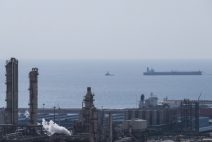
Traffic through the strategic waterway remains negligible compared with pre-war levels. The Strait was an active conflict zone, and insuring vessels operating in the area remains expensive. Concerns also persist over the possible presence of mines in the waterway.
The agreement includes a 60-day ceasefire, but the strait could be closed again once that period expires, or logistical issues could emerge if Tehran imposes transit fees on shipping traffic.
Questions also remain about how quickly Gulf producers can restore output and recover from war-related damage.
“I see a significant risk that this situation does not unfold as optimistically as some investors are currently pricing in,” said Adam Turnquist, Chief Technical Strategist at LPL Financial.