Bank of America analysts have raised their estimates for Brent crude prices in the second half of 2026, citing ongoing geopolitical tensions.
In a note dated Monday, the bank lifted its forecast for the global oil benchmark for the last six months of the year to $95 a barrel from $83 a barrel.
Analysts estimated that disruptions to oil shipments through the Strait of Hormuz could reach roughly 14 million barrels per day, versus pre-war averages of 4 million to 8 million barrels per day.
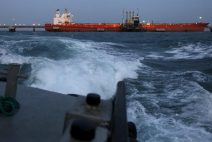
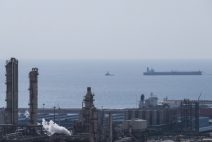
Oil supply flows have been dented by Iran's effective shuttering of Hormuz shortly after the U.S. and Israel launched a joint assault on the country in late February. About one-fifth of the world's oil and liquefied natural gas flowed through the strait prior to the start of the war.
In recent weeks, the conflict between Washington and Tehran has stalled, although hopes have grown that diplomatic efforts could make progress at the United Nations General Assembly gathering this week. A media report suggested that Iran has even offered to reopen Hormuz within seven days in return for a de-escalation in U.S. military pressure.
sank on Tuesday, sliding below $100 a barrel.
The contract had topped that level for several days, driven higher by signs that the Iran war was broadening into a wider regional conflict. Iran-backed Houthi militants and Saudi-aligned forces in Yemen have clashed over territory dominating the Bab el-Mandeb Strait, another critical chokepoint for Gulf oil flows.
Since Iran all but closed the Strait of Hormuz, Saudi Arabia, a major oil producer, has relied on the Bab el-Mandeb to connect its crude supplies with global markets.
Complicating matters further for Riyadh, separate attacks have disrupted a key east-west pipeline which transport energy products across the width of the kingdom.
Still, there have been some signs of resilience in regional oil flows. Saudi Arabia has reportedly been able to increase crude shipments through Hormuz, with the six-day average up sharply from August levels, according to satellite data cited by Reuters.
The BofA analysts said that while alternative routes and escorted shipments through Hormuz have mitigated some of the supply constraints, infrastructure damage and heightened tensions are likely to limit flows. Should these disruptions continue into next year, front-month Brent contracts could spike further, the analysts predicted.