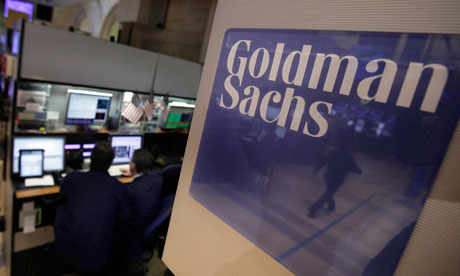
Goldman Sachs warns of renewed upside risks to oil prices
Goldman Sachs strategists say the physical oil market is tightening as renewed attacks on tankers in the Strait of Hormuz reverse an earlier recovery in Persian Gulf exports
Investing
Wednesday, 15 July 2026
Goldman Sachs strategists say the physical oil market is tightening as renewed attacks on tankers in the Strait of Hormuz reverse an earlier recovery in Persian Gulf exports, pushing Brent crude back into the mid-$80s per barrel and increasing upside risks to the bank's price outlook.
Gulf exports had recovered to more than 80% of pre-war levels during the first two weeks following the US-Iran memorandum of understanding. However, renewed attacks on oil tankers in the strait have since reduced export flows to below 50%, or around 11 million barrels per day (mbpd).
Goldman estimates the market is now facing a 13.4 mbpd shortfall in Persian Gulf oil flows, an imbalance that "would likely require greater demand destruction and further inventory drawdowns" unless tensions ease in the near term, according to strategists led by Yulia Zhestkova Grigsby.
The bank noted that observable shipping data may understate actual exports, as some tankers transit the Strait of Hormuz with their transponders switched off before resuming transmissions once they reach safer waters. As a result, estimates for Gulf exports in mid-June have already been revised 1.1 mbpd, or 10%, higher than previously reported.
Goldman identified further geopolitical escalation—particularly additional attacks on tankers or energy infrastructure—as the main downside risk to the recovery in export flows. Based on the US blockade in April, the bank estimates that a renewed blockade of Iranian ports and coastal areas could reduce Iran's exports by 1.5 to 2 mbpd.
Saudi Arabia and the United Arab Emirates, which have the largest tanker fleets and some of the region's highest-quality oil fields, accounted for most of the rebound in Gulf exports through early June. Meanwhile, crude production losses relative to February levels could still amount to around 9 mbpd.
On the demand side, Goldman said China's crude imports "may have bottomed out" after falling 5 mbpd year-on-year in June, while imports across the rest of Asia returned to normal seasonal patterns. Although the bank does not expect an immediate rebound given China's high crude inventories of 1.9 billion barrels, equivalent to 117 days of demand, it expects imports to increase as Middle Eastern producers lower their official selling prices for July and August.
Goldman maintained its Brent price forecast of $80 per barrel for the fourth quarter of 2026 and $75 per barrel for 2027, but said near-term risks are "skewed to the upside".
According to the bank, Brent could climb above $110 per barrel in the fourth quarter if the recovery in Gulf exports continues to stall. Conversely, prices could fall to around $60 per barrel by year-end if production exceeds expectations and demand recovers more slowly than anticipated.