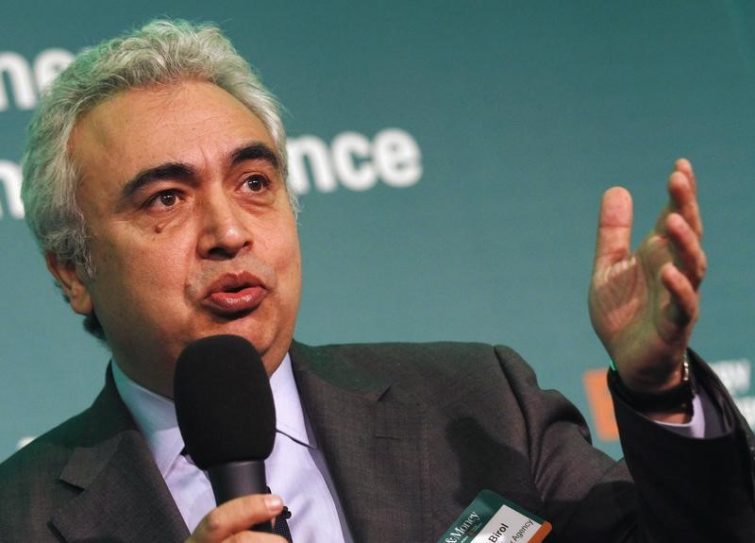
International Energy Agency (IEA) Executive Director Fatih Birol warned that even if the Strait of Hormuz were to reopen immediately, it would take “a long time” to return to normal, with risks of rising inflation and slower economic activity.
“Even if the Strait of Hormuz were reopened tomorrow, it would take a long time before returning to normal, because energy, oil, and other infrastructure in the Persian Gulf have been severely damaged,” Birol said in an interview with France Inter radio.
Asked about his previous estimate of two years to restore pre-war activity at Gulf energy facilities, Birol confirmed that timeline, noting that the recovery would be gradual.
The IEA chief—whose organization was created in 1974 in response to the first oil crisis and includes most OECD countries—reiterated that the current situation is “the biggest crisis in history” in energy terms, as it affects not only oil supply but also gas, fertilizers, and petrochemical products.
“It will slow economic growth, and the longer it lasts, the more difficult it will be,” he warned, adding that developing countries will be particularly affected, many facing a “debt spiral” that could weigh on future generations.
In its monthly oil market report published on the 14th, the IEA said global oil production fell by 10.1 million barrels per day (mb/d) in March due to the war in the Middle East, marking the largest drop on record.
The blockade of the Strait of Hormuz led to losses of 13 mb/d in oil exports from the Persian Gulf, partly offset by drawing on reserves, which are now declining. This situation has prompted the agency to revise its oil demand forecasts sharply.
Birol added that “for now, Russia is emerging relatively unscathed” from the crisis, as its oil revenues doubled in March, driven mainly by higher prices and, to a lesser extent, increased exports.
However, he said that “in the long term, the consequences of this crisis will reshape the energy map,” as occurred after the 1973 oil shock, when many countries turned to nuclear power to replace hydrocarbons in electricity generation.
He expects there will again be “winners,” particularly renewables and nuclear energy, while some Asian countries may increase their reliance on coal.
Asked about U.S. President Donald Trump’s climate skepticism, Birol said that “the Trump administration has its own priorities,” but stressed that data shows renewables are expanding globally due to their economic flexibility.