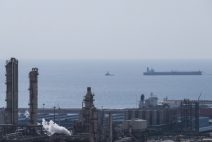
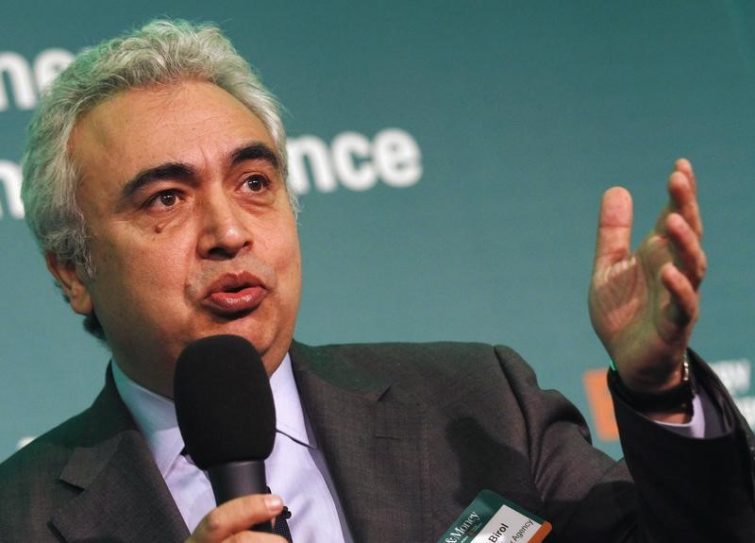
The head of the International Energy Agency (IEA), Fatih Birol, said there is ample oil on global markets and that current problems stem from a “temporary logistical disruption” caused by the blockade of the Strait of Hormuz, but warned that gas prices in the European Union could surge “within days or weeks” if the conflict in the Middle East continues.
“If the crisis continues in this way, Asian buyers and European buyers will have to compete for LNG that will become increasingly scarce. That will be the challenge for European countries if the crisis continues in the coming days or weeks,” Birol said.
He made the remarks at a press conference after attending a meeting of the European Commission’s College of Commissioners focused on energy, hosted by Commission President Ursula von der Leyen ahead of the European summit scheduled for March 19.
The Turkish economist explained that the factor driving crude prices higher in markets is a “supply disruption,” not a lack of supply.
“There is plenty of oil in the market. It is a logistical problem. And it is a serious one that is creating difficulties for many countries, some more than others,” he warned.
Birol added that he has spoken with ministers from the United States, Brazil, Saudi Arabia, Azerbaijan, Norway and Canada, as well as with importers, and that they are working to respond to the challenge.
Regarding the strategic oil reserves coordinated by the IEA, Birol said there are no immediate plans for “collective action” to deploy them, but that “given current market conditions, all options are on the table.”
“We are facing a temporary disruption, a logistical disruption,” Birol said, while noting that “countries have different domestic contexts and different domestic options,” and that the IEA will remain vigilant and active.
The situation for gas “is another story,” different from oil, because “most of the gas leaving the Middle East is destined for Asia,” Birol said, estimating that competition for cargoes could emerge within days.
In the medium term, however, that potential congestion should ease, as “a huge wave of LNG is expected to arrive over the next five years, around 300 bcm of new liquefied natural gas,” he said.
This will mean “downward pressure on prices. And more importantly, 75% of that LNG will be flexible,” he added.
Birol also advised the EU not to reconsider its policy of phasing out purchases of Russian gas. “Considering Russia as an alternative option for gas supply would be economically and, in my opinion, politically a mistake,” he argued.
More broadly, Birol suggested that the EU should use the current instability in fossil fuel supplies as an opportunity to accelerate investment in renewables and nuclear energy, similar to the push for energy autonomy following Russia’s invasion of Ukraine.
“Of course, Europe will continue importing natural gas for years to generate electricity. But I believe it is in the interest of European countries (…) to make greater use of renewable energy—solar, wind and others—and also to strongly support the return of nuclear power,” he said.
“Both renewables and nuclear energy should be the pillars of the European electricity system,” Birol concluded.