G7 countries signaled their readiness to take “all necessary measures” to stabilize hydrocarbon markets, whose prices have surged due to the war in the Middle East, including the possibility of tapping strategic reserves.
This was the main message following a videoconference meeting of finance ministers from the world’s seven richest countries. According to French minister Roland Lescure, whose country currently holds the group’s rotating presidency, the ministers stressed that they will closely examine “how we can stabilize overall flows and the overall market.”
That could lead to “the release of strategic reserves,” Lescure reiterated in remarks to reporters in Brussels, after emphasizing that for now there are no supply problems for either gas or oil in Europe or the United States.
The French minister explained that developments over the weekend, including attacks on oil facilities in the Persian Gulf, and the market reaction on Monday morning—with sharp increases in oil and gas prices—had convinced G7 countries to “send very clear and firm messages and, I hope,” he said, “very effective ones to reassure everyone.”
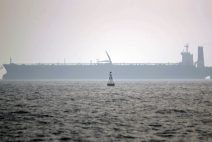
In his view, concerns in oil and gas markets are mainly related to export disruptions from the Persian Gulf, specifically Iran’s closure of the Strait of Hormuz, through which roughly one-fifth of the world’s hydrocarbon supply typically passes.
Most of these hydrocarbons are destined for Asian markets, and Lescure stressed that “there is currently no supply problem for oil or gas in Europe or the United States.”
However, fears of a prolonged closure of the Strait of Hormuz or the destruction of production facilities or refineries in the Persian Gulf triggered a surge in prices earlier in the day.
The Brent crude benchmark used in Europe at one point rose by more than 30%, briefly surpassing the $119 per barrel threshold, adding to the 20% gain recorded the previous week.
By early afternoon, the increase had eased to just under 10%, although Brent remained above the symbolic $100 per barrel level.
Members of the International Energy Agency (IEA)—which include all G7 countries—are required to hold reserves equivalent to at least 90 days of imports to respond to exceptional situations, particularly when supply disruptions occur.
According to IEA data updated last November, all members met that requirement with the sole exception of Australia.
Since its creation following the 1973 oil crisis, the agency has drawn on its strategic reserves five times, most recently in March and April 2022 during the energy crisis triggered by Russia’s invasion of Ukraine.